A company decides it is time to build a proper rewards program for its employees or customers. The intent is right, the budget is approved, and someone gets tasked with finding a platform to run it. A few weeks later, they are staring at five different vendor websites, each claiming to be the best option, each using slightly different language to describe more or less the same thing.
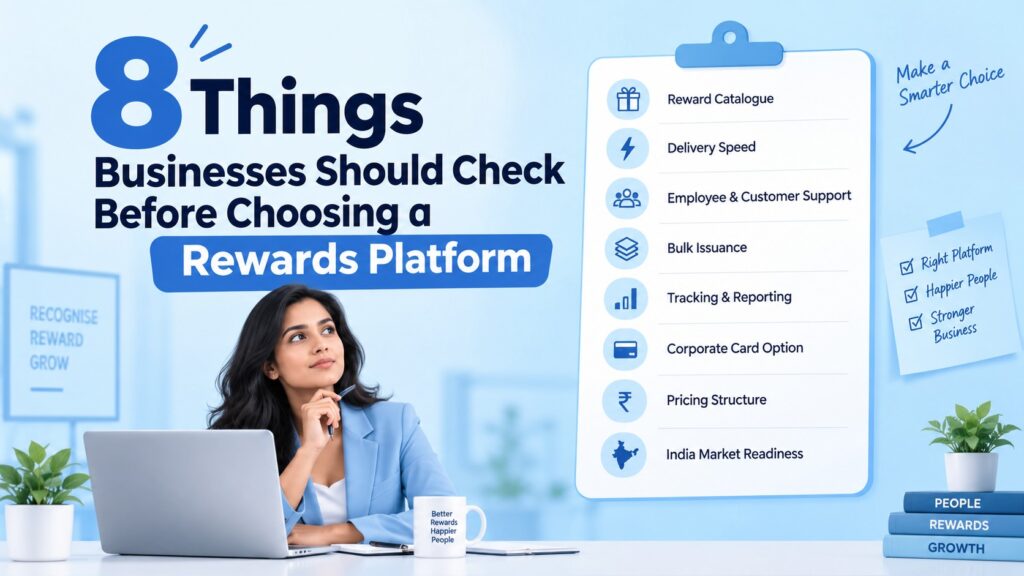
This is where a lot of companies get stuck, not because good platforms do not exist, but because it is genuinely hard to compare them without knowing what actually matters. Here are eight things worth checking carefully before making that decision.
1. How Wide Is the Reward Catalogue
The single biggest factor in whether a rewards platform actually gets used is choice. A platform tied to one or two brands will always underperform compared to one offering a broad catalogue across categories like fashion, dining, groceries, and entertainment.
This matters because different employees or customers value different things. A platform with access to 400 plus brand vouchers gives recipients the freedom to pick something genuinely relevant to them, which is often the single biggest driver of whether a reward actually feels meaningful or gets ignored.
2. How Fast Is Delivery
Delay kills the emotional impact of a reward. A voucher or card that takes days to arrive, especially if it involves physical shipping or manual approval, loses most of the goodwill it was meant to create.
A good rewards platform should support instant or near instant digital delivery, whether that is a gift card sent immediately after an achievement or a voucher issued the same day a customer hits a milestone. Speed is not a nice to have here, it is often the difference between a reward that feels genuine and one that feels like an afterthought.
3. Can It Handle Both Employees and Customers, or Just One
Some platforms are built specifically for internal employee recognition. Others focus only on customer loyalty. Businesses that eventually need both, employee rewards and customer facing vouchers, often find themselves managing two separate systems if they pick a platform built narrowly for just one use case.
It is worth checking early whether a platform can reasonably support both employee and customer facing rewards, even if only one is needed right now. Growing into a second use case later is common, and switching platforms midway is far more disruptive than planning for it upfront.
4. How Easy Is Bulk Issuance
For any business operating beyond a handful of people, manual, one at a time issuance becomes unworkable quickly. A platform needs to support bulk issuance cleanly, whether that means rewarding an entire sales team after a target is hit or sending festive vouchers to a large customer base at once.
| Manual Process | Platform With Bulk Support |
| One reward issued at a time, slow to scale | Hundreds or thousands issued in one action |
| High chance of errors in tracking who received what | Clear records tied to each recipient |
| Difficult during high volume periods like festive season | Handles volume spikes without added manual work |
5. What Does Tracking and Reporting Actually Look Like
A rewards program without clear tracking quickly becomes difficult to manage. Businesses need to know who received what, when it was redeemed, and how much budget has actually been used, especially once a program runs across multiple teams or customer segments.
Before committing to a platform, it is worth asking to see an actual reporting dashboard, not just a description of one. Vague promises about analytics often turn into frustration later, once the program is already running and the reports turn out to be far more limited than expected.
6. Is There a Corporate Card or Expense Management Option
Many businesses eventually realise that rewards and everyday corporate spending overlap more than they initially expected, travel expenses, small purchases, employee reimbursements, and reward budgets often need similar tracking and control.
A corporate card based option, alongside the rewards catalogue, allows businesses to manage both reward distribution and general spending through one system, rather than juggling separate tools for each. This becomes particularly useful as a company grows and the number of people managing budgets increases.
7. How Does Pricing Actually Work
Pricing structures across rewards platforms vary more than businesses expect. Some charge a flat platform fee regardless of usage. Others charge per transaction or per reward issued. A few bundle in hidden costs around redemption or delivery that only become clear once the business is already committed.
It is worth asking directly, before signing anything, exactly how costs scale as usage grows. A platform that looks affordable at a small scale can become surprisingly expensive once a business is issuing hundreds or thousands of rewards a month.
8. Does the Platform Actually Understand the Indian Market
This one gets overlooked often, especially by businesses that come across global platforms first. A rewards platform genuinely built for the Indian market understands local payment methods, works well with Indian banks, and offers a catalogue of brands that Indian employees and customers actually recognise and want.
A platform built primarily for a different market, then adapted for India as an afterthought, often shows its gaps quickly, through a weaker local brand catalogue, clunky payment integration, or support that struggles with India specific queries.
Making the Final Decision
None of these eight points work in isolation. A platform with a wide catalogue but poor tracking creates one set of problems. A platform with great reporting but slow delivery creates another. The businesses that end up genuinely satisfied with their choice are usually the ones who checked most of these points together, rather than picking based on a single impressive feature during a sales pitch.
This decision connects closely to the broader question of what an employee rewards and recognition program actually is and why it matters for growing companies in the first place. Choosing the right platform is simply the practical next step once a business has decided that structured recognition and reward is worth building properly, rather than running informally.
Taking the time to check these eight things before signing on with a platform saves businesses from a common, costly mistake, discovering months into a program that the platform simply cannot do what the business actually needs.
Frequently Asked Questions
1. What is a rewards platform?
A rewards platform is a digital system that helps businesses manage, distribute, and track rewards for employees or customers. It can support use cases such as recognition, incentives, referrals, milestones, and customer loyalty programs.
2. What should businesses look for in a rewards platform?
Businesses should evaluate reward variety, delivery speed, bulk issuance, tracking and reporting, pricing, ease of use, and support for their target market. The platform should also match the company’s current and future reward requirements.
3. Why is reward catalogue variety important?
A wider reward catalogue gives employees or customers more choices based on their preferences. This can make rewards more relevant and increase the likelihood that recipients will use them.
4. How important is instant reward delivery?
Fast delivery helps businesses connect recognition with the achievement or occasion. Digital delivery can make rewards more timely, especially for employee recognition, performance incentives, referrals, and customer milestones.
5. Can a rewards platform support both employees and customers?
Yes, some rewards platforms can support both employee and customer reward programs. Businesses should check this capability before choosing a platform if they expect their reward requirements to expand in the future.
6. How can businesses compare rewards platform pricing?
Businesses should compare the complete pricing structure, including platform fees, transaction charges, reward issuance costs, delivery charges, and any additional fees. They should also consider how the total cost changes as reward volumes increase.