HR teams in mid-sized companies manage a long list of responsibilities every week. Payroll queries, hiring, onboarding, compliance, employee requests, and internal processes all compete for their attention. Employee recognition is important, but finding the time to manage rewards consistently can be difficult.
This is one reason employee reward programs can lose momentum. The intention is there, but choosing, purchasing, distributing, and tracking individual rewards can create extra work for HR.
The good news is that personal rewards do not have to be complicated. Employees often value having a choice, receiving recognition at the right moment, and getting something that fits their interests.
Here are 10 employee reward ideas that can feel personal while keeping the administrative workload manageable.
Why Personal Employee Rewards Matter
A reward feels personal when it reflects what an employee values. It does not always require a customised gift or a handwritten note. Sometimes, simply giving employees the freedom to choose their own reward can make the experience more meaningful.
Traditional reward programs often require HR teams to select gifts, place orders, manage deliveries, and handle individual preferences. A digital reward system can simplify much of this process.
Employee choice is especially useful because HR does not need to predict what each person wants. Employees can select a reward that suits their lifestyle, interests, or current needs.
10 Employee Reward Ideas That Are Easy to Manage
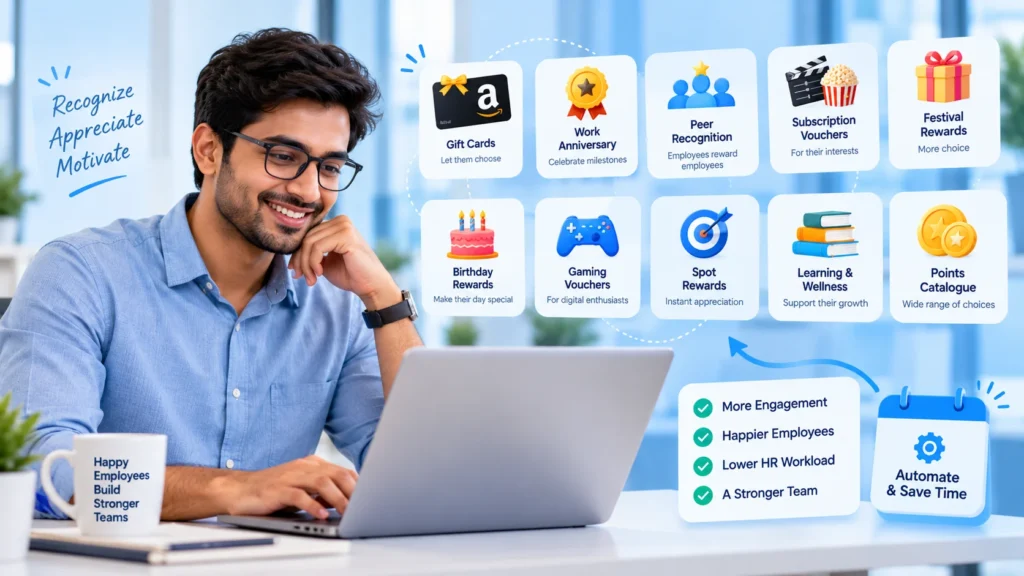
1. Choice-Based Gift Cards for Project Milestones
Completing a major project is a good opportunity to recognise an employee’s contribution. Instead of selecting the same gift for everyone, allow employees to choose their preferred brand.
A gift card sent soon after a project milestone can feel more relevant because the recognition is connected to a specific achievement. It also saves HR from having to guess each employee’s preferences.
2. Work Anniversary Rewards
Work anniversaries provide a natural opportunity to recognise employee loyalty and contribution. A small reward for completing one, three, or five years can make the occasion more meaningful.
HR teams can maintain anniversary dates within their existing employee records and schedule rewards in advance. Once the process is set up, anniversary recognition requires very little ongoing effort.
3. Peer-to-Peer Recognition Points
Managers are not always the first people to notice good work. Colleagues often see when someone helps with a difficult task, supports a new team member, or goes beyond their regular responsibilities.
A peer-to-peer recognition program allows employees to send points or small rewards to colleagues. This creates a culture where recognition can happen naturally across different teams.
4. Subscription Vouchers
Subscription vouchers can be a practical employee reward because they support services employees already use.
Depending on the audience, companies can offer vouchers for entertainment, productivity, learning, or other subscription-based services. Rucards, for example, offers subscription vouchers for services such as Disney+ Hotstar and MS Office.
These rewards can feel more useful than a generic corporate gift because employees can apply them to something that already fits their routine.
5. Festival Rewards With Employee Choice
Festivals are common occasions for employee rewards, but a fixed gift hamper may not suit everyone.
A digital voucher gives employees more flexibility. One person may prefer groceries, while another may choose clothing, electronics, or a family meal.
This approach also reflects the shift discussed in our guide on why instant digital rewards are replacing corporate gift programs.
6. Automated Birthday Rewards
Birthdays are another simple opportunity for employee recognition. A small digital reward delivered on the employee’s birthday can create a positive experience without requiring HR to manage each occasion manually.
Since birthday information is generally available in employee records, companies can schedule these rewards in advance and let the system handle delivery.
7. Gaming Vouchers for Employees Who Enjoy Gaming
A reward program does not need to focus only on traditional shopping or dining vouchers. Gaming vouchers can be relevant for employees who enjoy digital entertainment.
Options for platforms such as PlayStation, Xbox, or Steam can give employees a reward that matches their interests. Offering different categories also makes a reward catalogue more useful for a diverse workforce.
8. Instant Spot Rewards
Some achievements deserve recognition immediately.
An employee who takes ownership of an urgent task, supports a colleague during a busy period, or solves a difficult customer issue can receive a small spot reward soon after the contribution.
The timing matters. A reward delivered shortly after the achievement creates a stronger connection between the action and the recognition.
9. Learning and Wellness Rewards
Employees have different priorities beyond their daily responsibilities. Some may value professional development, while others may prefer fitness, wellness, or lifestyle-related rewards.
Companies can include course subscriptions, fitness memberships, wellness vouchers, or similar options in their reward catalogue.
Giving employees a choice also makes these rewards more inclusive. Each employee can select something that aligns with their own interests.
10. Points-Based Reward Catalogue
A points-based catalogue brings several of these ideas together.
Employees can receive points for milestones, achievements, peer recognition, birthdays, anniversaries, or other occasions. They can then redeem those points against different brands and reward categories.
A broad selection of brand vouchers allows employees to choose something that suits them instead of receiving the same reward as everyone else.
This model can also make reward management easier because HR can establish the rules and reward values in advance.
Comparing Employee Reward Ideas by Effort
| Reward Idea | Personal Feel | HR Effort |
| Choice-based gift card | High, employee chooses the brand | Very low |
| Work anniversary reward | High, linked to an important milestone | Low |
| Peer-to-peer points | High, recognition comes from colleagues | Very low |
| Subscription voucher | High, based on existing habits | Low |
| Festival voucher | Medium to high, employee chooses how to use it | Low |
| Birthday reward | High, linked to a personal occasion | Very low with automation |
| Gaming voucher | High for relevant employees | Low |
| Spot reward | Very high, because it is timely | Low |
| Learning or wellness reward | High, based on individual interests | Low |
| Points catalogue | Very high, because employees choose | Low after setup |
Where Employee Reward Programs Create the Most HR Work
Selecting a reward is often only one part of the process. The larger workload can come from purchasing, distribution, tracking, delivery issues, and employee queries.
Physical gifts can require address collection, inventory management, packaging, courier coordination, and delivery follow-ups. These tasks become more difficult as the workforce grows.
Digital rewards can simplify many of these steps. Rewards can be delivered electronically without collecting delivery addresses or coordinating physical shipments.
For larger programs, a corporate card based approach can also help companies manage reward budgets and distribute rewards in bulk. This can reduce the need for separate spreadsheets and manual tracking.
How to Build a Simple Employee Reward Rhythm
An effective reward program does not need to recognise every possible occasion. Start with a few moments that are easy to manage and meaningful to employees.
For example:
- Birthdays: Schedule a small digital reward automatically.
- Work anniversaries: Set rewards based on key service milestones.
- Project achievements: Let managers send spot rewards when employees reach important milestones.
- Peer recognition: Give employees a simple way to recognise colleagues.
- Festivals: Offer digital vouchers with a choice of brands.
- Performance milestones: Use points or vouchers for significant achievements.
This approach keeps regular recognition running without creating a separate manual process for every occasion.
It also supports the broader approach covered in our guide to employee rewards and recognition programs, where recognition becomes part of the regular employee experience rather than a once-a-year activity.
Keep Employee Rewards Fair and Simple
A few basic practices can make a reward program easier for both employees and HR teams.
- Set clear rules: Employees should understand which achievements or occasions qualify for rewards.
- Keep values consistent: Similar achievements should have similar reward values across teams.
- Reward promptly: Timely recognition creates a stronger connection with the achievement.
- Offer meaningful choices: A wider selection allows employees to find rewards that suit their preferences.
- Review employee feedback: Check which rewards employees use and adjust the catalogue over time.
- Set a clear budget: Defined reward limits make the program easier to manage and forecast.
The Bigger Picture
Personal employee rewards do not require a large HR team or a complicated process. The key is to combine timely recognition with employee choice and a system that handles routine administration.
Start with two or three occasions, such as birthdays, work anniversaries, and project milestones. Once the process is running smoothly, additional options such as peer recognition, festival rewards, and points-based programs can be added.
Small and consistent moments of recognition can become a natural part of the employee experience while keeping the workload manageable for HR.
Frequently Asked Questions About Employee Rewards
What are the best employee reward ideas for a small HR team?
Choice-based gift cards, birthday rewards, work anniversary rewards, and automated digital vouchers are practical options for small HR teams. They provide flexibility while keeping administration relatively simple.
How can companies personalise employee rewards?
Companies can personalise rewards by giving employees a choice of brands, categories, or redemption options. This allows employees to select something that matches their interests instead of receiving a standard gift.
Are digital rewards easier for HR teams to manage?
Digital rewards can reduce several manual tasks associated with physical gifts. There is no need to manage physical inventory, collect delivery addresses, or coordinate courier deliveries. Rewards can also be scheduled and distributed electronically.
What occasions should companies use for employee rewards?
Common occasions include birthdays, work anniversaries, project milestones, festivals, exceptional performance, peer recognition, and important team achievements. Companies can select occasions that fit their culture and reward budget.
How can companies keep employee reward programs fair?
Clear eligibility rules, consistent reward values, transparent processes, and employee choice can help create a fair reward program. Companies should also review how rewards are distributed across teams and roles.
How much should companies spend on employee rewards?
There is no single amount that works for every company. The budget can depend on the occasion, employee level, company size, and overall recognition strategy. A consistent and well-planned reward program can be more useful than occasional high-value gifts.